Securing Germany's Underwater Lifelines: Key Takeaways from the Optics11 Webinar
Critical underwater infrastructure, such as subsea cables, offshore energy assets, and communication networks, has become a strategic security priority across Europe. Recent incidents have highlighted the vulnerability of these assets and accelerated efforts to develop scalable monitoring and protection capabilities.
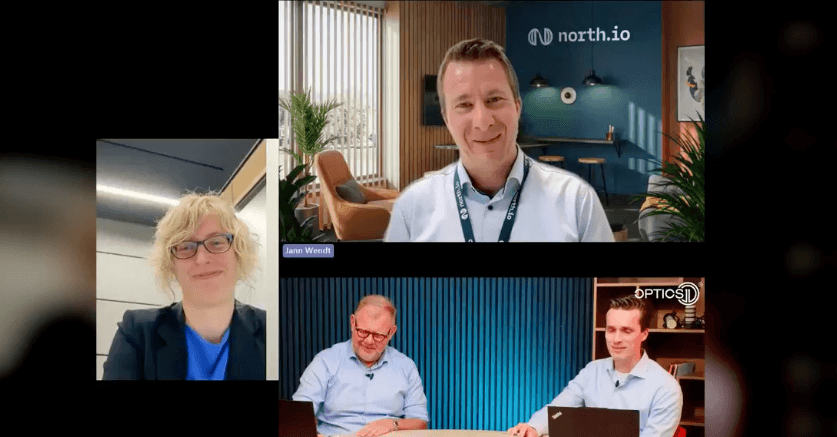
In a recent webinar hosted by Optics11 experts from north.io, Optics11, and SeaSEC discussed securing Germany’s underwater lifelines. Using this year’s SeaSEC exercise as a practical example, the panel explored current challenges, emerging technologies, and collaborative approaches to protecting critical underwater infrastructure.
Key Takeaways
- Lessons learned from SeaSEC challenges
- How industry and defence can collaborate
- Technology validation is no longer enough; operational integration is required.
- Data interoperability is becoming a critical challenge.
- Future solutions will require scalable data platforms and common operational pictures.
- Continuous experimentation environments like SeaSEC will be essential for future readiness.
The challenge is no longer collecting information. It is turning vast quantities of underwater data into actionable intelligence that can support operational decisions.
During the webinar, Jann Wendt, CEO of north.io, explained:
"Providing the right information in the right time to the right person is even more challenging."
This shift reflects a broader reality across maritime security. Organizations need the ability to ingest, standardize, and combine information from multiple sources to create a common operational picture that operators can use.
Why Underwater Infrastructure Protection Has Become a Strategic Priority
The protection of critical underwater infrastructure has become a matter of national resilience. Europe's energy networks, telecommunications systems, and digital connectivity increasingly rely on assets located beneath the sea. As geopolitical tensions rise and incidents involving subsea infrastructure gain attention, governments and defence organizations are reassessing how they monitor and protect these vital assets.
The challenge is not simply detecting threats. It is creating the ability to continuously monitor large maritime areas, identify anomalies quickly, and enable informed decision-making before disruptions occur.
For Germany and its European partners, this means moving beyond traditional approaches and adopting new technologies that can provide persistent underwater awareness at scale.
The Role of Data in Underwater Security
As underwater monitoring networks continue to expand, data platforms are becoming as important as the sensors themselves. The real value emerges when these different data streams can be brought together into a unified operational view.
This is where north.io plays a critical role. north.io acts as the integration layer between underwater sensing technologies and operational users.
During the webinar, Wendt described this role:
"Our role is being the middle layer. We are ingesting all these different data types. We are standardizing them in a way so that they can be consumed by the common operational picture the different navies are using."
As underwater infrastructure protection evolves, operators will increasingly require interoperable systems that can combine information from many different sensors and providers. Data platforms provide the foundation that enables this interoperability while ensuring that decision-makers receive timely, relevant information.
Industry and Defence Sector Must Work Together
A recurring message throughout the discussion was the importance of collaboration.
Defence organizations bring operational expertise, threat understanding, and mission requirements. Industry contributes innovation, agility, and the ability to rapidly develop and adapt new capabilities.
SeaSEC has become an important stage for these collaborations. Reflecting on the SeaSEC Rostock challenge, Carine van Bentum, Director of SeaSEC, emphasized how these challenge weeks help both defence and industry work together in the still early stages of partnership.
"The speed of the industry was what stood out the most."
“This speed combined with our information and our knowledge about how you detect threats and what you do with it; I think that will help us a lot.” Bentum later added.
This ability to rapidly integrate technologies and form operational partnerships is becoming increasingly important as governments seek solutions that can be deployed quickly in response to evolving threats.
Watch north.io’s, Jann, weigh in on the tension between speed and data security.
What Comes Next for Underwater Infrastructure Protection?
The discussion concluded with a clear message: continuous innovation and experimentation are essential.
As threats evolve, monitoring capabilities must evolve as well. Participants emphasized the importance of maintaining environments where new technologies can be tested, validated, and integrated under realistic operational conditions.
For organizations involved in maritime security, the path forward is becoming increasingly clear. Future success will depend on combining advanced sensing technologies, interoperable data platforms, and strong public-private partnerships into scalable operational capabilities.
As the webinar demonstrated, protecting critical underwater infrastructure is not a single technology challenge. It is a systems challenge: one that requires collaboration, integration, and a shared commitment to building resilient maritime security architectures for the future.
To see how north.io is contributing to the solution reach out today.