REPMUS 2026: How north.io Is Advancing Maritime Unmanned Systems with Ocean Data
August 11. Kiel, Germany. north.io will travel once again to Sesimbra and Tróia, Portugal, to participate in the international NATO exercise REPMUS (Robotic Experimentation and Prototyping with Maritime Unmanned Systems) 2026. The 2026 exercise will follow a structured four-phase programme consisting of system setup and integration, experimentation and risk reduction, operational serials, and final evaluation. The exercise will run from 31 August to 25 September, providing an environment to test and validate maritime technologies in realistic operational scenarios.
Part of our team will be on site in both locations to use north.io’s Ocean Data Platform and Ocean Data Processing Engine combined with secure hardware to a Naval Ocean Data Warehouse (NODW) in the Rapid Environment Assessment (REA) and Naval Mine Warfare (NMW) Focus Areas. These technologies will help integrate, manage, and share ocean and seabed data from multiple sources for a fast dissemination into the common operational picture. The influence of REPMUS extends well beyond the exercise itself. Lessons learned during REPMUS increasingly inform broader NATO experimentation and international defense collaboration, particularly in the development of command-and-control concepts, secure data sharing, and the operational integration of autonomous systems.
Background on REPMUS
What began as a national research and development activity in 2010 has grown into one of the largest maritime unmanned systems exercises in the world. The exercise is co-organised today by the Portuguese Navy, NATO (through CMRE, the Maritime Unmanned Systems Initiative, and Allied Maritime Command), the University of Porto, and, since 2024, the European Defence Agency (EDA). Recent editions have drawn several thousand participants from more than twenty nations, deploying well over one hundred unmanned systems across the air, surface and underwater domains.
The aim of REPMUS is to deliver large-scale, multinational operational experimentation. REPMUS promotes the acceleration of national and multinational MUS development programmes and projects, bringing together the "triple helix" of end users, academia, and industry. It drives multi-domain interoperability toward interchangeability of MUS, and in doing so promotes new developments and technologies through experimentation, testing and evaluation in realistic environments and operational scenarios. It also extends the operational exploitation of MUS capabilities to support national and multinational maritime safety and security agencies. To close maritime capability gaps, REPMUS26 aligns this operational exploitation with the Rapid Adoption Action Plan, informing both the NATO Defence Planning Process (NDPP) and the EU Capability Development Plan (CDP). Finally, it raises awareness of the technological and operational capability that MUS deliver in multi-domain, multi-purpose operations.
north.io’s role in REPMUS 2026
Experimentation and testing take place across seven focus areas in which MUS play a crucial role. north.io takes part in two of these, Naval Mine Warfare (NMW) and Rapid Environmental Assessment (REA), reducing the latency of data analysis and transfer and, in doing so, enhancing overall situational awareness.
Within NMW, REPMUS26 trains participating units and partners in Autonomous Underwater Vehicle (AUV) procedures for mine warfare operations. This is achieved by building interoperability and tactical cooperation between units through improved data handling and management. The intent is to move from a serialised structure toward a single operational scenario as the exercise progresses, introducing realistic time constraints along the way.
NMW addresses a persistent gap. Modern sensors now generate far more data than current mine-hunting, and mine-sweeping tools were designed to handle. This is where north.io provides the critical missing link. Through its data processing engine, sonar data can be processed, analysed and disseminated into a common operational picture almost immediately, enhancing situational awareness in the command room.
REA focuses on collecting, processing and disseminating meteorological, oceanographic and geospatial data and products to strengthen situational awareness and support decision-making across the exercise's other focus areas. The strand is coordinated by NATO's Maritime Geospatial, Meteorological and Oceanographic Centre of Excellence through its REA Working Group.
In recent editions REA has prioritised three lines of effort: trialing technologies for surveying shallow coastal waters, converting data gathered by underwater gliders and other unmanned platforms into three-dimensional ocean models, and developing new means of sharing geospatial and environmental information with operational commanders in near-real time. north.io is included in this effort, fusing data from glider swarms and other unmanned platforms into a shared and continuously updated picture of the operational environment, in support of a common understanding of the battlespace across participating nations.
REPMUS 2025
north.io has been committed to maritime security for years: from supporting authorities in Germany, such as the Schleswig-Holstein Explosive Ordnance Disposal Service, to projects with the offshore industry and the European ARGUS project focusing on the protection of critical underwater infrastructure. north.io took part in the international REPMUS exercise last year.
During REPMUS 2025 and the parallel NATO Dynamic Messenger exercise, north.io is sending a clear signal: the company provides the digital foundation for modern underwater operations.
north.io CEO, Jann Wendt, said in a statement last year,
"With our Ocean Big Data Platform, we are creating the digital foundation for one of NATO's largest experimental exercises on maritime security. We are proud to be the enabler at REPMUS 2025, ensuring that underwater sensor data is transferred to the joint situation picture, a step towards a truly ‘transparent ocean'”.
By participating in REPMUS 2026, north.io continues to strengthen its role in advancing digital maritime capabilities, supporting the development of interoperable technologies that help enable safer, more informed, and more effective operations beneath the ocean's surface.
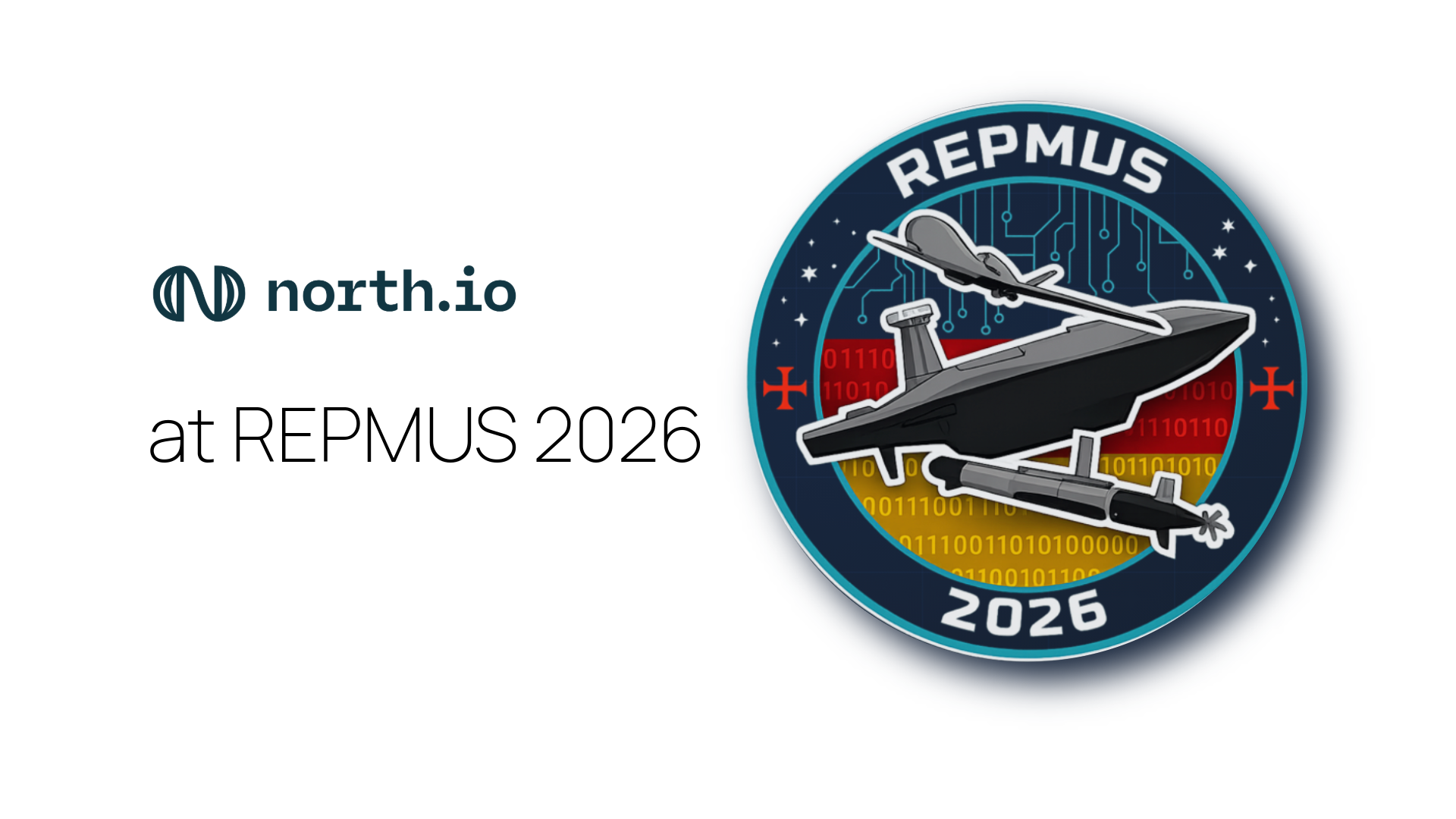
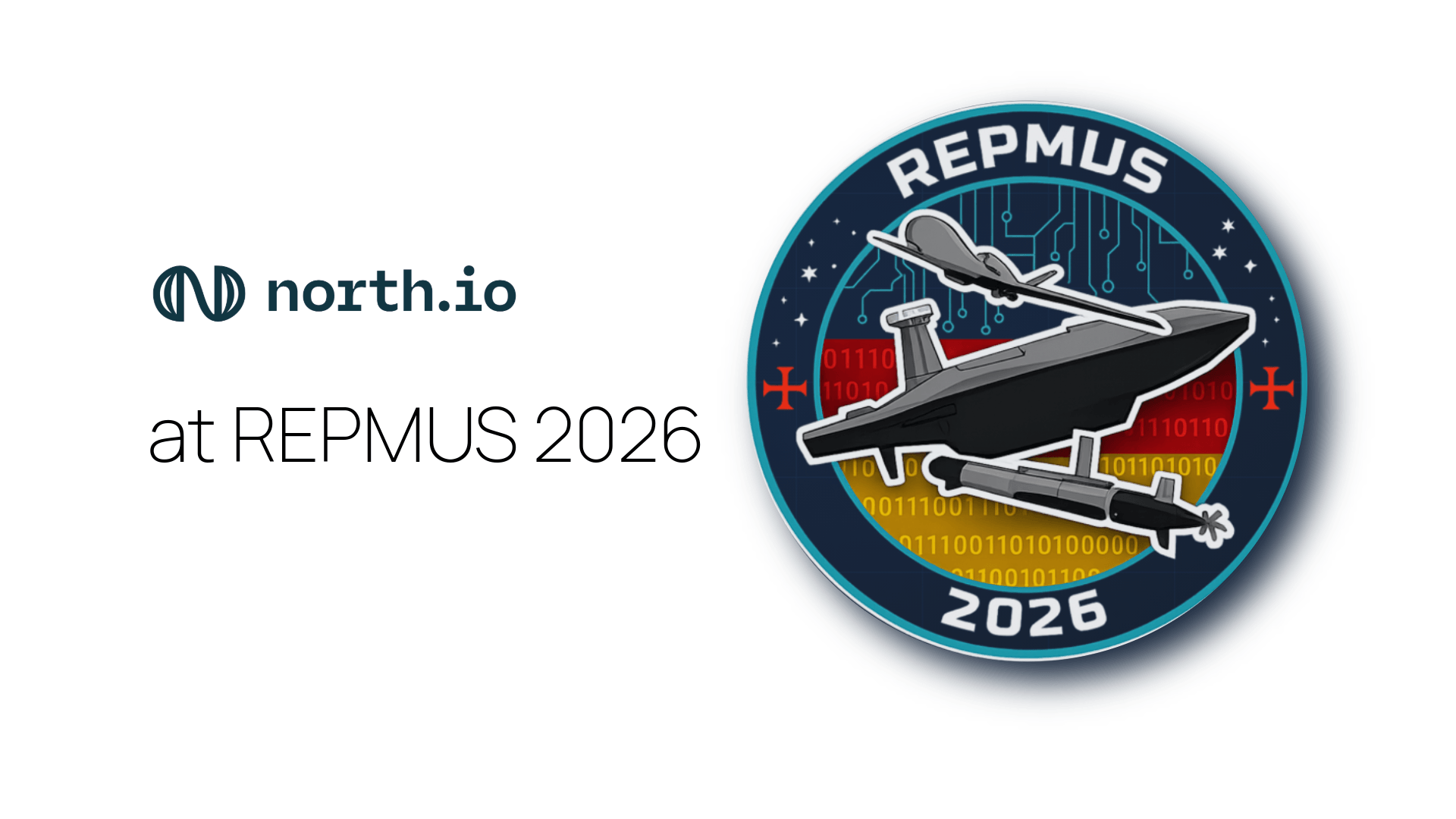
REPMUS logo produced by Leon Evers